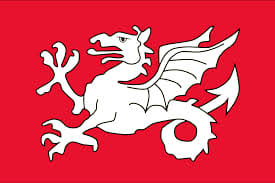
Anglo-Saxon England
Long before William the Conqueror landed at Pevensey in 1066, England had a functioning system of representative governance that was, for its time, remarkably sophisticated. It was not democracy in the modern sense — no system of the seventh century could be — but it embodied a principle that would take the rest of the world centuries to rediscover: that the power to govern derives from the consent of those being governed, and that a king who ignores his counsellors does so at his peril.
The institution was called the Witenagemot — from the Old English meaning "assembly of the wise" — and it is traceable to at least the early seventh century, in the court of King Æthelberht of Kent around AD 600. As the Germanic tribes who had settled England after the Roman withdrawal consolidated into the kingdoms of the Heptarchy — Northumbria, Mercia, East Anglia, Essex, Kent, Sussex, and Wessex — each developed its own version of this council. When Alfred the Great unified those kingdoms into a single England in the ninth century, the Witenagemot became a national institution.
It advised the king on legislation and policy. It confirmed — and could depose — monarchs: it deposed Sigeberht of Wessex in 755 and Æthelwald Moll of Northumbria in 765. It witnessed royal charters, adjudicated major legal disputes, and approved taxation. Beneath it sat the shire moots — county assemblies attended by lords, bishops, the sheriff, and representatives from each village — which administered local law and custom. England had, in effect, both a national parliament and a system of local representative government, operating in parallel, for at least four centuries before the Norman Conquest.
The Witenagemot was not a parliament in the modern sense: it had no fixed procedure, no permanent meeting place, and no right to override the king. But it embodied a constitutional principle of extraordinary durability — that governance required consultation, that power was not absolute, and that those who held land and commanded men had both a right and an obligation to participate in the decisions of the realm. Nineteen-century Whig historians would later call it "one of the lineal ancestors of the British Parliament." They were not wrong.
It is worth pausing here, because this matters to everything that follows. England was
not a country that learned democracy from somewhere else. England invented it independently — imperfectly, aristocratically, over centuries — and then had it taken away violently ripped away.
Origins to 1707 for more
England's democratic tradition is older than Westminster, older than the Union, older than the British Empire. It does not need to be invented. It needs to be restored.