The Anglo-Saxon foundations
To understand what England lost in 1707, it is necessary to understand what England had built in the eight centuries before it. The English parliamentary tradition did not begin with Magna Carta. It did not begin with Simon de Montfort. It began in the councils of Anglo-Saxon kings — imperfect, aristocratic, and often violent, but grounded in a principle that would take the rest of the world centuries to rediscover: that the power to govern derives, at least in part, from the consent of those being governed.
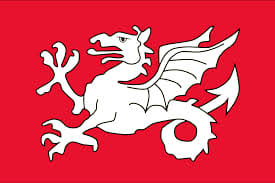
The story begins with the Heptarchy — the seven Anglo-Saxon kingdoms that emerged after the Roman withdrawal: Northumbria, Mercia, East Anglia, Essex, Kent, Sussex and Wessex. Each had its own king, its own customs, its own laws. What they shared was a common Germanic tradition of governance by council, the belief that a king who ignored his advisers did so at his peril.
It was King Egbert of Wessex, who ascended the throne in 802, who first began to consolidate these kingdoms into something recognisable as England. His decisive victory over Mercia at the Battle of Ellendun in 825 established Wessex as the dominant power in southern England and began the long process of unification. Egbert was not merely a military conqueror. He built alliances through marriage, secured the support of the Church — which provided not just spiritual legitimacy but administrative capacity — and implemented legal reforms that would govern the emerging Anglo-Saxon society for generations. When the Vikings began raiding in earnest from 835, the administrative and military structures he had put in place allowed for a more coordinated defence than had ever previously been possible.
The Witenagemot — from the Old English meaning "assembly of the wise" — is traceable to at least the early seventh century. It advised the king on legislation, taxation, and policy. Crucially, it could also choose and depose monarchs: it deposed Sigeberht of Wessex in 755 and Æthelwald Moll of Northumbria in 765. Beneath the Witenagemot sat the shire moots — county assemblies attended by lords, clergy, the sheriff, and representatives from each village — which administered local law and custom. England had, in effect, both a national parliament and a system of local representative government, operating in parallel, four centuries before the Norman Conquest.
What this period reveals is that England was never, in its origins, a land of absolute monarchy. Authority required consent, even if that consent was limited to the aristocracy and the clergy. Governance was grounded in custom, duty and responsibility. These early structures — though disrupted by the Norman Conquest — left a legacy that would shape the English political imagination for centuries. The notion that rulers must listen, that law should be predictable, and that consent matters, would resurface in Magna Carta, in common law, and in the very idea of Parliament itself.
Alfred, law and national identity
Alfred inherited the throne of Wessex in 871 in the middle of an existential crisis. The Vikings had overrun Northumbria, Mercia and East Anglia. They were moving through Wessex. Within seven years, Alfred was a fugitive in the Somerset marshes — the king of a kingdom that barely existed.
His recovery, culminating in the decisive victory at the Battle of Edington in 878 and the Treaty of Wedmore that followed it, was more than military. It was constitutional. Alfred understood that survival required not just an army but a state — a set of institutions, laws and shared identity capable of outlasting any individual king.
The Doom Book, Alfred's legal code compiled around 890, was the most ambitious attempt yet made to standardise English law. Drawing on biblical tradition and existing Anglo-Saxon custom, it aimed to create a single body of law applicable across his realm — law rooted not in royal whim but in principle, in the mutual obligations of ruler and ruled. His legal texts emphasised oaths and the responsibilities of both kings and subjects. This was a significant shift from purely customary law toward something more codified and enduring.
Equally significant was Alfred's cultural programme. He initiated a translation of key Latin texts into Old English, making knowledge accessible to those who were not clerics. He promoted literacy not for its own sake but as a tool of statecraft — a literate, informed people was a more governable, more unified people. His establishment of fortified towns known as burhs provided both military protection against the Vikings and centres of trade, administration and civic life. They were the skeleton of a nascent urban England.
Alfred recognised that the survival of the Anglo-Saxon kingdoms depended on a unified identity, and that a standardised legal framework was a tool of statecraft as much as of justice. Power could only be stable when it was accountable. That lesson has been relearned — and forgotten — many times since.
Alfred died in 899, leaving a kingdom transformed. His grandson would complete what he had begun.
Æthelstan: first king of England
King Æthelstan, Alfred's grandson, is not a name that features prominently in the popular history of England. It should. He is the man who, more than any other, can claim to have created England as a single political entity — and who established the institutional model through which it would govern itself for the next century and a half.
Æthelstan's military victory at the Battle of Brunanburh in 937 — against a coalition of Viking, Scottish and Strathclyde forces — was one of the most significant battles ever fought on British soil. It broke the last serious challenge to the idea of a unified English kingdom. After Brunanburh, Æthelstan could genuinely call himself king of all England, and he did.
But his significance lies as much in governance as in warfare. He ruled through the Witenagemot — the council of nobles, clergy and thegns through which consent was expressed, laws approved, disputes settled and royal decisions ratified. He issued a series of legal codes that sought to standardise law across all the territories under his rule — addressing criminal law, trade, property, and the mechanisms of dispute resolution. He created, in embryo, a national legal system.
The mid-tenth century that followed Æthelstan's reign settled into patterns of governance that would echo for centuries. The social hierarchy of kings, ealdormen, thegns and ceorls was deeply tied to land. Hundred courts administered local justice, attended by freemen who were expected to swear oaths and participate in dispute resolution. This mixture of local responsibility and royal oversight created a semi-formal system — decentralised but coordinated. It was not democracy. But it was not autocracy either. Authority was earned, and it required the cooperation of those below it.
The reigns of Æthelred II (978–1016) demonstrated how fragile royal authority could be when it failed to command trust. Æthelred's payment of Danegeld, periodic purges of Danes, and failure to maintain the loyalty of his thegns led to repeated political and military breakdowns. Yet the Danish conquest under Cnut (1016–1042) did not disrupt English institutions as much as might be expected. Cnut preserved the Witenagemot, confirmed Anglo-Saxon land grants, and retained existing legal structures. A foreign king could rule effectively if he upheld the law and maintained the trust of local lords. Governance was increasingly defined by institutions rather than ethnicity — a remarkably modern idea for the eleventh century.
By 1066, England was a politically unified realm with increasingly centralised governance. Kings held authority, but their legitimacy depended on the approval of nobles, the participation of the Witan, and the enforcement of law through local custom. That was the England that William of Normandy conquered. What followed was not liberation, but interruption.
The Norman interruption
The Norman Conquest in 1066 did more than change the royal line. It imposed an entirely new model of governance, law, landholding, and military control. Where Anglo-Saxon kings had ruled by consent of the Witan and administered law through a relatively decentralised system, William, Duke of Normandy, brought with him a centralised, feudal model rooted in oaths of loyalty, written records, and royal dominance — not to mention paranoia, mistrust and rivalry.
William I confiscated lands from Anglo-Saxon lords and redistributed them to Norman supporters, creating a new aristocracy bound to the king through direct land tenure. All land was held "from the king." The Domesday Book — an unprecedented administrative survey of 1086 — catalogued landholding, population, resources and obligations across England. It was not merely a record. It was a mechanism of control. For the first time, a king could tax, summon or dispossess based on detailed knowledge of his realm.
The castles that proliferated across England in this period are often understood as defences against foreign invasion. That misses their primary purpose. Their real power lay as symbols of the wealth, authority and control that Norman lords exercised over the people of their domain — and by extension, the power of the crown over the kingdom. They were instruments of occupation.
The Witenagemot was not immediately abolished — William was shrewd enough to preserve the form of English governance while gutting its substance, retaining an advisory Curia Regis while making clear that its function was to serve him, not constrain him. Henry I issued the Charter of Liberties in 1100 — promising to uphold traditional laws and reduce abuses of royal power — demonstrating that even early Norman kings had to negotiate the limits of their authority. That charter, largely forgotten today, was the direct precursor to Magna Carta a century later.
The period of the Anarchy (1135–1154) — civil war between Matilda and Stephen — exposed the fragility of central authority when barons acted without constraint. It demonstrated that strong governance required both legitimacy and enforcement, and that peace, order and mutual interest were preferable to feudal chaos. Henry II's restoration of royal authority after 1154 initiated lasting reforms: circuit judges applying standard laws across the kingdom, the beginnings of trial by jury, the professionalisation of royal justice. What became known as common law — law common to all parts of the realm — was born in this period.
It was a period not of linear progress but of constant negotiation between crown, barons, clergy and eventually commoners. There was rarely peace. But out of that negotiation, something enduring was being built.
Magna Carta: myth and reality
Magna Carta holds a near-sacred place in the story of English liberty. It is cited as the cornerstone of democracy, the source of habeas corpus, the origin of trial by jury, and the bedrock of constitutional government. Much of what is popularly claimed for it is wrong. Understanding what it actually was — and was not — is essential to understanding the English constitutional tradition honestly.
John's reign was marked by military failure, oppressive taxation and political overreach. He lost most of the Angevin Empire's French territories, extracted money through arbitrary justice, and alienated both the barons and the Church. By 1215, the barons rebelled, marched on London, and forced the king into negotiations. The document sealed at Runnymede on 15 June 1215 was a peace treaty between elites — and one that collapsed almost immediately.
The 1215 charter's 63 clauses concerned almost entirely the rights and grievances of barons and the behaviour of the king. It did not establish trial by jury — that process evolved separately under Henry II. It did not guarantee universal rights — serfs, villeins, women, and most townspeople were not beneficiaries. It did not bind the king permanently — it was annulled by the Pope within weeks at John's request. It did not establish Parliament. Clause 39 — "No free man shall be seized or imprisoned... except by the lawful judgment of his equals or by the law of the land" — is often cited as the origin of modern rights. In reality, "free men" in 1215 were a small minority of the population. The definition of free men in the 13th century and the 21st century are as different as a pond from an ocean.
Magna Carta was reissued multiple times — in 1216, 1217 and 1225 — each time with clauses removed and terms revised. By 1297, when Edward I enrolled it in statute, the original 63 clauses had been reduced to a handful. Today, only three remain on the statute book. What endured was not its legal content but its idea: that even kings are subject to the law. That idea, more than any specific clause, echoed through English political development for the next 800 years.
Magna Carta was born of failure — a peace treaty between a failed king and a rebellious aristocracy. It collapsed within weeks and never created the liberties claimed for it. Yet in asserting that the monarch was not above the law, it set a precedent that resonated far beyond its narrow context. It inspired a dream. That dream still matters — even after we strip away the myths.
The 17th-century lawyer Sir Edward Coke revived Magna Carta as a weapon against Stuart absolutism, claiming it enshrined habeas corpus and the supremacy of common law. His interpretation was selective and often historically inaccurate — but it proved politically potent, feeding directly into the Petition of Right (1628) and the Bill of Rights (1689). In the 18th century, it inspired the American Founders. The legal connections were frequently tenuous. The political significance was not.
The making of Parliament
On 20 January 1265, a man who was not the king and was not English summoned the first recognisably modern parliament in history. Simon de Montfort — a Frenchman who had married the king's sister and then led a baronial revolt against him — called together not just bishops and lords but two knights from every shire and two burgesses from every significant town.
This was genuinely radical. The knights and burgesses were there not to be told what the king had decided, but to advise on the reorganisation of government. De Montfort's power was short-lived — he was killed at the Battle of Evesham later that year — but the precedent he established was not. Edward I institutionalised it. The Model Parliament of 1295 formally summoned knights, burgesses, clergy and barons, laying the groundwork for a bicameral structure that has endured to the present.
The deposition of Edward II in 1327 — with Parliament's participation — was a crucial moment. A monarch had been removed through a quasi-legal process. Conditional monarchy, if not yet codified, was now part of political life. The deposition of Richard II in 1399 reinforced it. Parliament was not yet sovereign. But it was becoming, slowly and painfully, the institution through which sovereignty would eventually be expressed.
By the mid-fourteenth century, England had the rudiments of legal accountability, fiscal oversight and representative consultation. It was not democratic. But it was no longer autocratic in the Norman sense. The institutions of the Exchequer, the common law courts, Parliament, and local justice had developed not by democratic intent but by negotiated necessity — by the interplay of crown, nobility, church and townsmen that shaped English political identity over three centuries of conflict.
The Tudor state
Between 1350 and 1603, English governance was transformed. The monarchy moved from fragile reliance on feudal loyalty to commanding a centralised, bureaucratic apparatus. Parliament evolved from a feudal assembly to a legislative partner. The Tudors, while often autocratic, created lasting institutional frameworks — and left behind a constitutional expectation that would prove impossible to reverse.
The Black Death of 1348 had catalysed social transformation, killing between a third and a half of England's population and giving the survivors a bargaining power that feudalism had never permitted. The Peasants' Revolt of 1381 demonstrated that governance would henceforth have to consider social pressures beyond elite interests. The Wars of the Roses — decades of dynastic civil war in which central government effectively collapsed — proved the reverse: that without strong central authority, the result was violence, lawlessness and baronial predation.
Henry VII ended the chaos by winning Bosworth in 1485 and then governing through administrative reform, fiscal prudence and the systematic suppression of overmighty nobles. His emphasis on order and dynastic security shaped Tudor governance for a century. Henry VIII transformed it irrevocably. The break with Rome and the creation of the Church of England — achieved through a series of parliamentary Acts including the Act of Supremacy of 1534 — made Parliament an instrument of radical change on a scale that had never been contemplated. The Reformation Parliament of 1529–1536 sat longer and passed more statutes than any before it.
The Tudor paradox: Henry VIII's tyrannical tendencies actually reinforced the precedent that major changes to law and religion required parliamentary legislation. He could not have the Reformation without Parliament. In using Parliament so extensively, he inadvertently strengthened the institution that would eventually destroy the Stuart monarchy. Parliament was gaining power — and letting that power go would prove impossible.
The mid-Tudor crisis — the reign of the boy-king Edward VI, the nine-day tragedy of Lady Jane Grey, and the Catholic reaction under Mary I — demonstrated the fragility of state institutions when the monarchy was central and constitutional limits were absent. Rapid policy reversals, religious persecution and the execution of a sixteen-year-old girl on charges of treason illustrated how completely governance could change direction depending on who held the crown. Mary I died in 1558 after less than five years, and England breathed a collective sigh of relief.
Elizabeth I brought stability, administrative consolidation and relative religious peace. She governed through patronage and a network of loyal advisers, the Privy Council operating as an executive body while Parliament was summoned for subsidies and essential legislation. Her reign solidified the expectation that governance required legislative consent — even if she was frequently in tension with Parliament over succession, prerogative and freedom of speech. By 1603, when Elizabeth died without an heir, England was no longer a medieval realm of barons and knights. It was a nation governed by law, statute and increasingly professional administration. The real power still lay in the hands of a select few. But the seeds of constitutional monarchy had been sown. The seventeenth century would water them — in blood.
Stuarts, civil war and republic
The Stuart experiment began in hope and ended in the bloodiest conflict on English soil. James I arrived from Scotland in 1603 with grand ambitions for British unity and a fully developed theory of divine right kingship — the belief that monarchs ruled by God's will and were accountable only to Him. This put him immediately at odds with an English political tradition that had spent four centuries establishing the contrary.
James's belief in divine right coloured every aspect of his rule. He resented Parliament's claim to control taxation and foreign policy. He dissolved Parliament repeatedly and ruled for extended periods without it, fostering a growing perception of arbitrary, unaccountable government. His court was marked by extravagance and the spectacular mismanagement of patronage through his favourites, most notably George Villiers, Duke of Buckingham — a man whose dominance in court politics became a lightning rod for parliamentary grievance. The seeds of crisis were sown.
Charles I inherited not only the crown but a political culture saturated with suspicion and unresolved questions of sovereignty. He lacked his father's capacity for even superficial compromise. His marriage to a French Catholic princess alarmed Protestant England. His repeated dissolution of Parliament, his imposition of forced loans, his revival of Ship Money — a coastal levy applied inland and without parliamentary consent — and his support for Archbishop Laud's High Anglican religious policies, which many Puritans read as creeping Catholicism, alienated virtually every political constituency.
The Petition of Right of 1628 — affirming that taxation required parliamentary consent, that arbitrary imprisonment was unlawful, that soldiers could not be billeted in private homes — was a landmark. Charles accepted it under pressure and immediately sought ways to undermine it. By 1629, after a dramatic confrontation in the Commons, he prorogued Parliament and vowed to rule alone. For eleven years he did so.
The Personal Rule collapsed when Charles attempted to impose the English Book of Common Prayer on Scotland in 1637. The Scots rebelled. Charles needed Parliament to fund a war. The Long Parliament he summoned in 1640 had no intention of being dissolved. It abolished prerogative courts, passed the Triennial Act, impeached and executed the King's chief ministers — and when Charles entered the Commons in January 1642 to arrest five leading MPs, violating a longstanding constitutional principle, the rupture became irreparable. By August, both sides were armed.
The conflicts in England, Scotland and Ireland between 1642 and 1651 killed an estimated 80,000–90,000 soldiers in combat and a further 125,000–140,000 soldiers and civilians from injuries, disease and displacement directly attributable to the wars. Approximately 5% of the population of the island of Great Britain died — proportionately the bloodiest conflict in the history of these islands. All wars are a waste of life. But few are as poignant as a conflict fought specifically to establish the principle that rulers must be accountable — and which failed to secure that principle for another forty years.
The execution of Charles I in January 1649 — the first time a reigning English monarch had been tried and killed by his own Parliament — was an act of radical constitutional rupture. The monarchy was abolished. The House of Lords was disbanded. England became a Commonwealth. What followed was Oliver Cromwell's extraordinary and deeply contradictory journey from backbench MP to Lord Protector — a man who dissolved Parliament at swordpoint while denouncing its corruption, who championed liberty in principle while suppressing it in practice, and who came, in his last years, to exercise powers that rivalled and in many ways exceeded those of the king he had helped execute.
Cromwell was the first of the modern world's authoritarian rulers who had seized power by force of arms without claiming royal lineage. The English experiment with republicanism lasted eleven years and ended in abject failure. The Commonwealth collapsed because, without checks and balances, the purity of the cause became its own justification for tyranny. When leaders begin to believe they embody the revolution rather than serve it, the road to hell is paved with the best of intentions. In 1660, the monarchy was restored — not because it had proved its worth, but because the alternative had lost its credibility.
Restoration and Glorious Revolution
Charles II returned from exile in 1660 to jubilant crowds — not because he was beloved, but because the alternative had failed. The restoration of the monarchy was not a triumph of principle. It was a restoration of expedience. The crown returned not because monarchy had proved its worth, but because republicanism had lost its credibility. In doing so, the people were betrayed — not by a single man, but by a system that had no intention of learning from its own collapse.
Charles governed with outward charm and inward cynicism. He was affable, witty and shrewd — and he secretly signed the Treaty of Dover in 1670, agreeing to support France in its war against the Dutch and to convert to Catholicism when politically convenient, in return for a pension of £160,000 per year from Louis XIV. This was not merely cynical. It was subversive. The King of England had conspired with an absolute monarch to weaken Parliament and realign England's foreign policy toward autocracy. Parliament knew nothing of the treaty's full terms until after Charles's death.
When Charles died in 1685, James II inherited the throne and promptly destroyed it in less than four years. He suspended laws unilaterally, reissued the Declaration of Indulgence without parliamentary consent, packed the army and government with Catholics, and imprisoned bishops who resisted. When his Catholic wife gave birth to a son in 1688, the prospect of a Catholic dynasty was enough. A coalition of nobles invited William of Orange to intervene.
What followed — the Glorious Revolution of 1688 and the Bill of Rights of 1689 — finally established, in written law, what the English political tradition had been arguing for four centuries: that Parliament was supreme, that the monarch could not suspend laws or raise taxes without consent, that there could be no standing army in peacetime without parliamentary approval, that elections must be free and Parliaments must meet regularly. The Bill of Rights did not create these principles. It codified them. It drew on Magna Carta, the Petition of Right, the common law and the bitter experience of two dynasties that had refused to accept parliamentary limits on their power.
The Restoration and the Glorious Revolution together demonstrate a pattern that runs through all of English constitutional history: power concedes nothing without pressure. Every advance in parliamentary authority was extracted from reluctant monarchs, not freely granted. The Bill of Rights was not a gift. It was a settlement imposed on a monarchy that had tried everything else and run out of options.
By 1702, when Anne succeeded William, England had a constitutional monarchy, a sovereign Parliament, an established Church, and a common law tradition that was the envy of Europe. It had built, over eight centuries of negotiation and conflict, an extraordinary democratic inheritance. Nineteen years earlier, it had also lost, at Edgehill and Marston Moor and Naseby, around a quarter of a million lives to establish the principle that kings must answer to the law. That inheritance — and that sacrifice — would be quietly dissolved in 1707.
The Union of 1707 — and what England lost
The Acts of Union of 1707 are usually presented as an act of statesmanship — two ancient rivals agreeing to pool their sovereignty for mutual benefit. The reality was considerably more complex, and the consequences for England specifically were never honestly debated at the time and have barely been debated since.
Scotland, in the early eighteenth century, was in financial ruin. The catastrophic failure of the Darien Scheme — a disastrous attempt to establish a Scottish colony in Panama — had destroyed an estimated quarter of all liquid capital in Scotland. England, for its part, was alarmed by the prospect of a hostile, independent Scotland under a Stuart or French-aligned monarch, threatening its northern border while it fought Louis XIV's France. Both sides had powerful reasons to negotiate. Neither side was entirely willing.
England applied pressure through the Alien Act of 1705, which threatened to treat Scots as foreign nationals and block trade unless negotiations for union were underway by Christmas. The Scottish Parliament, deeply divided and financially compromised, ultimately voted to dissolve itself: 110 in favour, 67 against. The Earl of Seafield, Scotland's Lord Chancellor, described it as "an end to an auld sang" — an epitaph, not a celebration. The church bells of St Giles in Edinburgh tolled out the tune How Can I Be Sad On My Wedding Day?
Queen Anne, a committed Anglican who had proclaimed herself "entirely English" in her first speech to Parliament, was the union's most ardent advocate. She had declared it "very necessary" to unite the two kingdoms. On 1 May 1707, the Kingdom of Great Britain came into existence. Both the Parliament of England and the Parliament of Scotland were dissolved and replaced with a new Parliament of Great Britain based at Westminster.
What is almost never discussed: England lost its Parliament too. The Acts of Union dissolved both legislatures. In law, the Parliament of England — which had existed in some form since at least 1265, which had survived conquest, civil war, regicide and revolution — ceased to exist on 1 May 1707. The new Parliament of Great Britain sat in Westminster, operated under English procedures, and was dominated by English MPs. In practice, it functioned very much as the English Parliament had before. But in constitutional law, England had no parliament of its own. It still does not. That omission — which no one considered significant in 1707 because no one imagined Scottish MPs would wish to vote on purely English domestic affairs — is the direct ancestor of the democratic deficit that exists today.
In 1707, England gave up the parliamentary independence it had fought for four centuries to establish. It was presented not as a loss but as a triumph — a new Great Britain with global ambitions. What was not acknowledged then, and is still not adequately acknowledged now, is that England as a distinct political entity with its own legislative voice disappeared into that new Britain, and has never been restored.
The story of how that erasure was deepened, formalised, and eventually exploited — and how an English identity born from a thousand years of democratic tradition came to be associated with the ugliest politics of the twentieth century rather than its finest — is told in the pages that follow.